The “Russian World” is a serious theological problem, because this ideology not only instrumentalizes religious organizations (primarily the Moscow Patriarchate, but also all major official religious associations in Russia), but also seeks to spread political ideology as religiousteaching, parasitizing on religion and merging with ultra-conservative and fundamentalist movements.
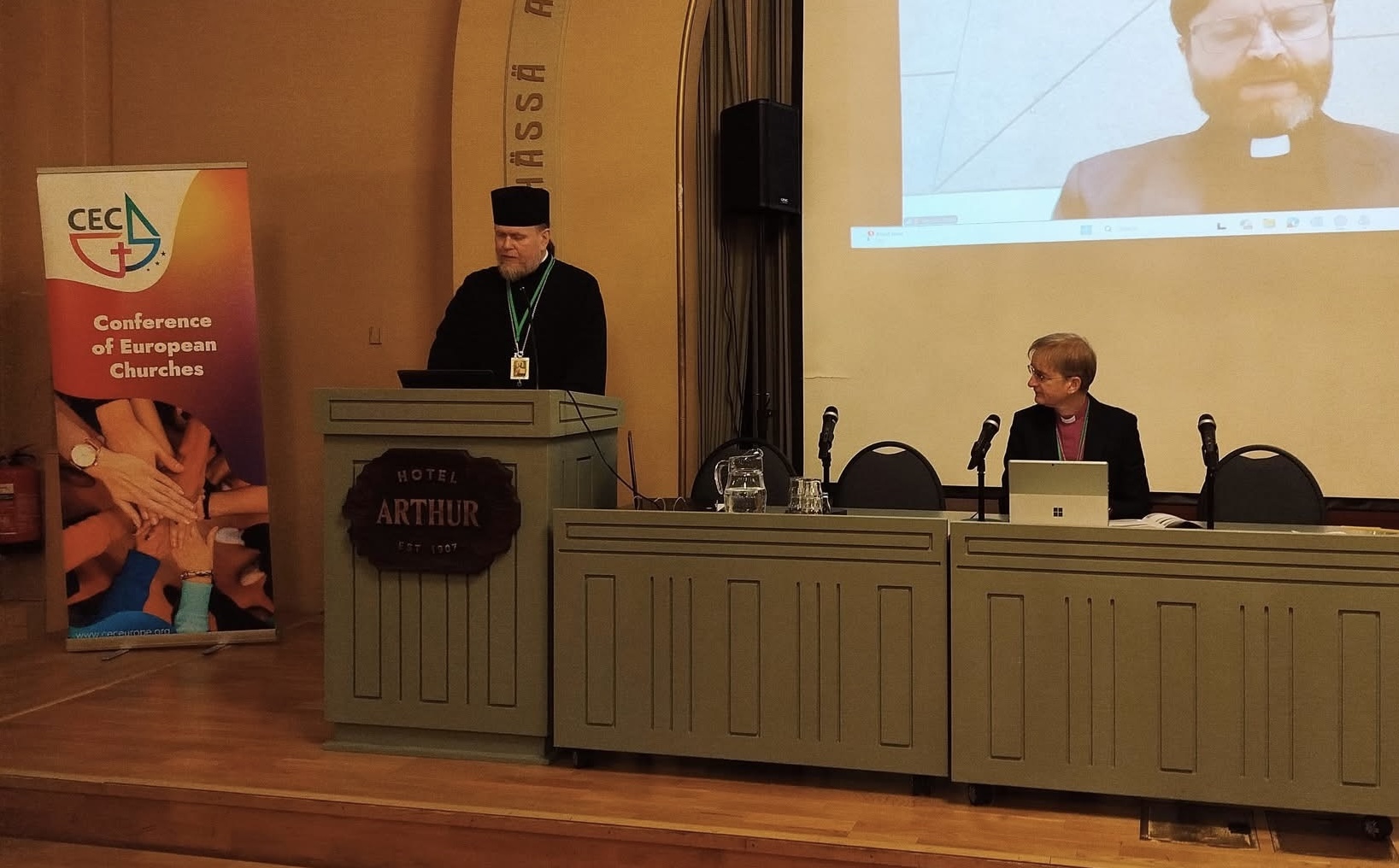
Metropolitan Yevstratii of Bila Tserkva stated this in hisreport at the Ecumenical Conference “Resisting Empire, Promoting Peace: Churches Confronting the Ideology ofthe ‘Russian World’”, which is taking place in Helsinki.
«Russian world’ is a theological issue. The reason is that this ideology not only instrumentalises religious organisations (primarily the Moscow Patriarchate, but also all major official religious associations in Russia), but also attempts to spread political ideology as religious doctrine, changing and rejecting the teachings of the Gospel where they clearly contradict this ideology. Instead of the Kingdom of Christ, which is not of this world, ‘Holy Rus’ is preached – an idealised but entirely earthly conception of the Russian state. Instead of blessed peacemaking, the idea of a ‘sacred war’ is preached, which is alien to the very foundations of Christianity and based on a dualistic perception of the world that is equally alien to Christianity. The struggle against evil and sin is replaced by the struggle against the ‘Anglo-Saxons,’ the ‘godless West,’ the ‘enemies of Russia,’ and so on», – said metropolitan Yevstratii.
In the bishop’s opinion, adherents of the ‘Russian world,’ who generally hold very anti-ecumenical beliefs, easily practise what might be called ‘fundamentalist ecumenism.’
They find unity in their faith with ultra-conservative and fundamentalist movements both among Christians of different denominations and among followers of other religions and even among atheists.
The OCU spokesperson also said that in the new circumstances, when the teachings and practices of the ‘Russian world’ are penetrating not only the Orthodox environment but also much further, parasitising on religious discourse, joint efforts and joint testimony by a wide range of church leaders, theologians and institutions, both within a single denomination and between denominations, are needed to adequately counteract this poison.